
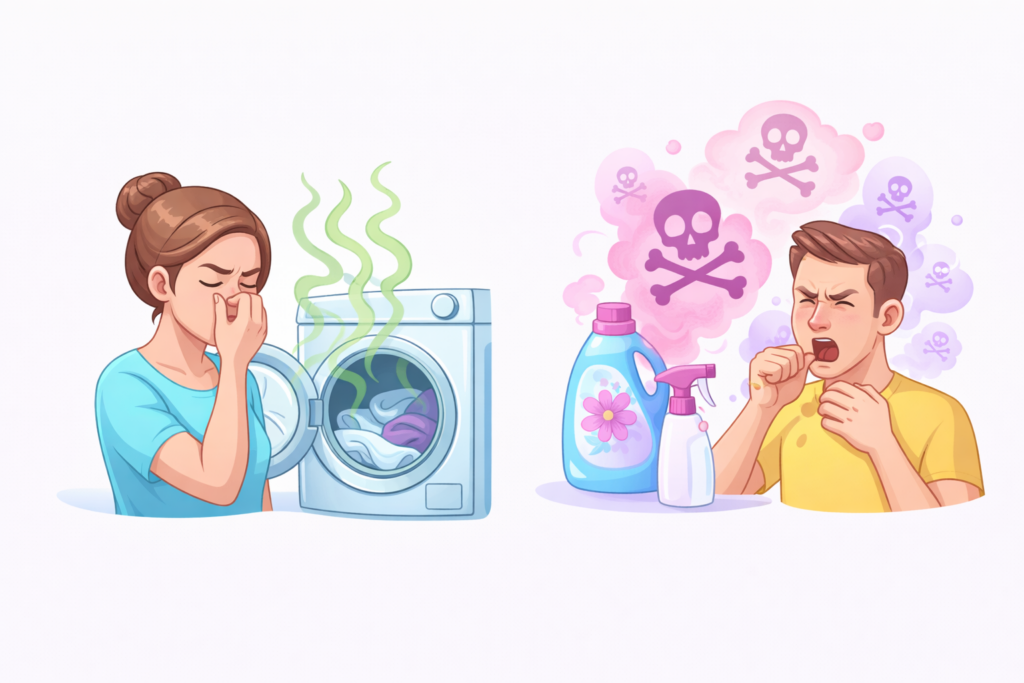
In the world of home laundry tips, fabric softener is often treated as essential. Many people believe soft clothes and a strong scent equal cleanliness. After years of operating a laundry business, I’ve come to a different conclusion.
I no longer use traditional fabric softener. Instead, I use diluted citric acid in the rinse cycle. Here’s why.
Fragrance Does Not Eliminate Odor — It Masks It
One of the biggest misconceptions in laundry care is that fragrance removes odor.
In reality, most scented detergents and fabric softeners do not eliminate the source of odor. They layer a stronger scent over it.
Odor usually comes from:
- Bacterial growth
- Sweat protein breakdown
- Detergent residue buildup
- Contamination inside the washing machine
If those root causes are not addressed, the smell often returns once the fragrance fades. Towels with persistent mildew odor are usually dealing with buildup and bacteria, not a lack of perfume.
The U.S. Fragrance Labeling Loophole
In the United States, “fragrance” on a product label can legally represent dozens or even hundreds of chemical compounds.
Manufacturers are not required to disclose each individual ingredient within that fragrance blend. While many of these chemicals are widely used, some individuals experience:
- Headaches
- Skin irritation
- Respiratory sensitivity
- Allergic reactions
Sensitivity varies, but the lack of transparency makes informed choice difficult.
Common Fragrance Chemicals in Laundry Products
Below are examples of fragrance-related ingredients commonly used in detergents and softeners.
| Ingredient | Purpose | Reported Concerns |
|---|---|---|
| Limonene | Citrus scent | Can form allergens when oxidized |
| Linalool | Floral scent | Skin irritation, contact dermatitis |
| Benzyl acetate | Fruity scent | Headaches, mucous membrane irritation |
| Phthalates | Fragrance stabilizer | Ongoing endocrine disruption debate |
| Synthetic musks | Long-lasting scent | Bioaccumulation concerns |
| Alpha-isomethyl ionone | Floral note | Possible allergen |
Reactions depend on individual sensitivity and level of exposure.
What Fabric Softener Actually Does to Fabric
Fabric softener works by coating fibers with conditioning agents. This coating creates a softer hand feel, but it also changes how fabric behaves.
Reduced Absorbency
Towels lose absorbency because the coating repels water. Performance fabrics may lose moisture-wicking capability.
Residue Against Skin
The conditioning layer remains on clothing and maintains prolonged contact with skin. For sensitive individuals, this can increase irritation risk.
The Hidden Cost: Washing Machine Buildup
From a commercial laundry perspective, the bigger issue is what happens inside the machine.
Drain Line and Drum Residue
Many softeners contain oily or wax-like ingredients. Over time, residue accumulates in the drum and drainage system. Even when diluted, buildup is difficult to fully prevent.
Mold and Odor Formation
Residue creates an ideal environment for bacteria and mold growth. Ironically, this often contributes to the very musty smell people are trying to eliminate.
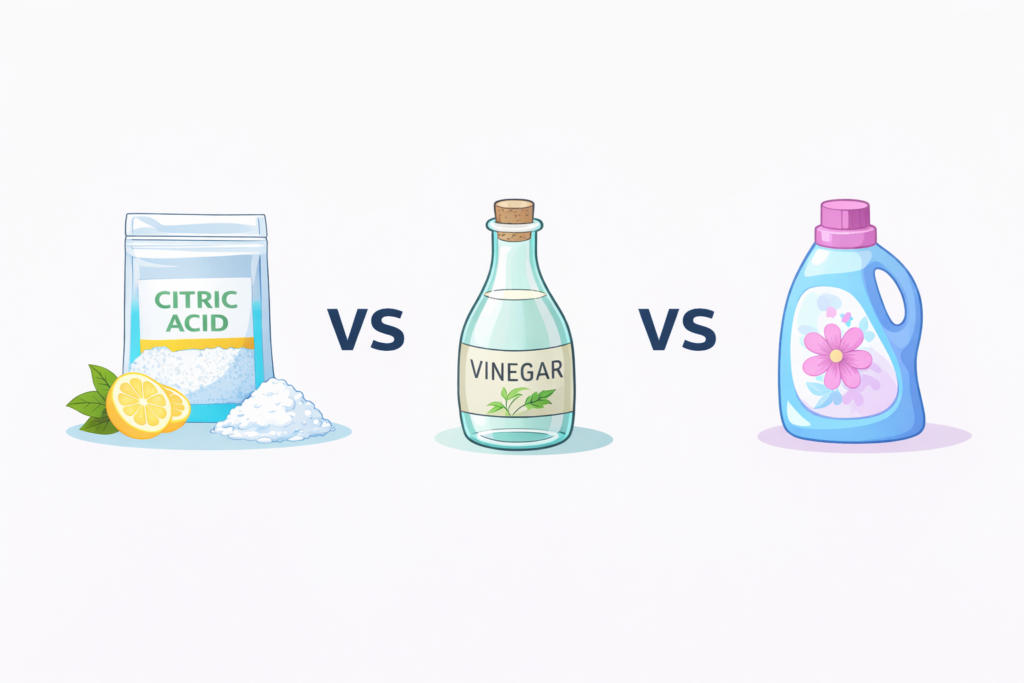
Why I Use Citric Acid Instead of Vinegar
White vinegar is often recommended as a natural alternative. While it can help neutralize detergent residue, I prefer citric acid for long-term equipment care.
Vinegar vs. Citric Acid
| Category | Vinegar (Acetic Acid) | Citric Acid |
|---|---|---|
| Odor | Strong vinegar smell | Nearly odorless |
| Rubber seal impact | Possible long-term hardening | Generally more stable |
| Stainless steel impact | Potential corrosion at high concentration | Lower corrosion risk |
| Residual scent | May linger | Minimal |
| Commercial suitability | Noticeable smell | Cleaner experience |
Washing machines contain rubber gaskets, hoses, and stainless steel drums. Repeated acidic exposure should be controlled carefully. In my experience, citric acid provides a better balance between effectiveness and equipment safety.
My Recommended Dilution Ratio
For routine use in the rinse cycle:
- 8 ounces of citric acid
- 1 gallon (3.8 liters) of water
Dissolve completely before use. This concentration helps:
- Neutralize alkaline detergent residue
- Reduce mineral buildup
- Improve fabric feel without coating
- Minimize odor development
If You Still Want to Use Fabric Softener
If fragrance is important to you, consider these practical adjustments.
Choose Fragrance-Free Options
Fragrance-free products reduce unnecessary chemical exposure while still providing conditioning benefits.
Use the Minimum Effective Amount
Most people use more than needed. Smaller quantities often achieve similar results.
Clean Your Machine More Frequently
Regular maintenance becomes essential if softeners are used consistently.
Final Thoughts
Clean laundry does not need to smell strong.
Fragrance often masks odor rather than solving the underlying issue. Long-term fabric care and washing machine health matter more than temporary scent.
After years in the laundry business, I choose citric acid over traditional fabric softener. For me, durability, skin comfort, and machine longevity outweigh artificial fragrance.
You may also find this helpful:
Why Fabric Softener Should Be Diluted Before Adding to the Wash