
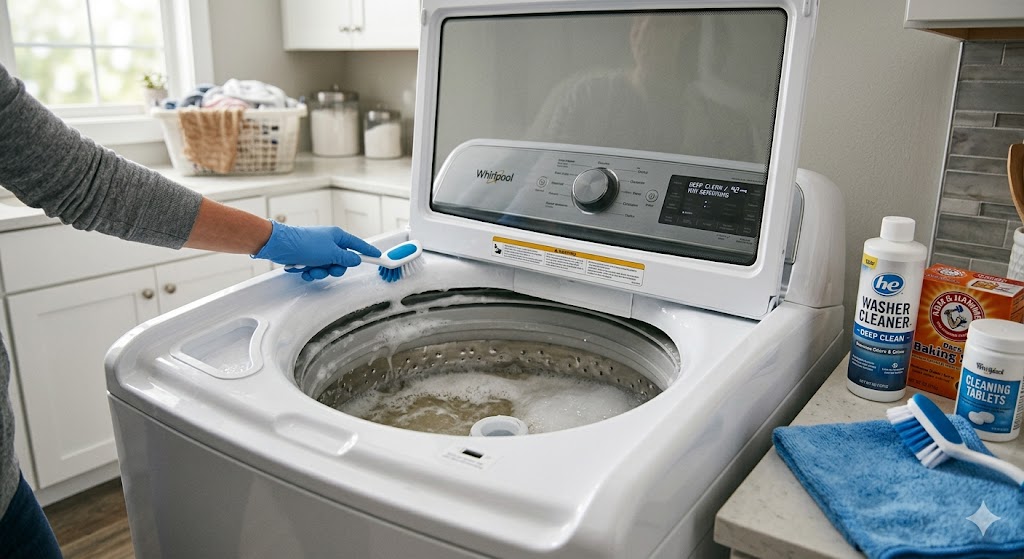
One common but misguided tip online is to add baking soda and vinegar to the washing machine at the same time, which mostly just produces fizz and does little to actually remove odors.
Why Washing Machines Start to Smell
A musty odor coming from the washing machine is a common frustration. Many people describe it as the smell of a damp towel that never fully dried. Once this odor appears, even freshly washed clothes can start to smell unpleasant.
The surprising part is that many people misunderstand the real causes of washing machine odor. Because the machine constantly uses water, it seems like it should stay clean on its own. In reality, the opposite can happen. Moisture, detergent residue, and organic debris create the perfect environment for bacteria and mold to grow.
Over time, these materials combine to form a sticky layer called biofilm. This buildup develops behind the drum, inside rubber seals, and within the drainage system. As the biofilm breaks down, it produces the musty smell many households struggle with.
Understanding what actually causes the odor is the first step toward preventing it.
Moisture and Poor Ventilation
One of the most common causes of washing machine odor is trapped moisture.
After a wash cycle finishes, many people close the washing machine door immediately. When moisture remains trapped inside, the interior stays humid for hours. This creates an ideal environment for mold and odor-producing bacteria.
Front-load machines are particularly prone to this problem because water often collects inside the rubber door gasket. The folds in this gasket trap moisture and detergent residue, making it one of the first places where mold begins to grow.
Allowing the machine to dry properly makes a significant difference. Leaving the door and detergent drawer open for a while after each cycle helps air circulate and reduces moisture buildup inside the drum.
Detergent and Fabric Softener Residue
Another major source of washing machine odor is detergent buildup.
Many people assume that adding more detergent will result in cleaner laundry. In reality, using too much detergent often leads to residue problems. Excess detergent does not fully rinse away and instead combines with lint, skin oils, and dirt from clothing.
This mixture forms a sticky layer along the outer drum and internal components of the washing machine. Over time, bacteria feed on this residue and begin producing odor.
Fabric softener can contribute to the same problem. Softener works by coating fabric fibers with a thin layer that makes them feel smoother. That same coating can accumulate inside the washing machine as well. When it mixes with detergent residue and organic debris, it can accelerate the formation of biofilm inside the machine.
Reducing detergent to the recommended amount and limiting the use of fabric softener can significantly reduce buildup over time.
Neutral Detergents and Residue Buildup
Neutral detergents are often chosen for delicate fabrics such as wool, silk, or performance garments. They are designed to be gentle on fibers, but this gentleness can also have an unintended side effect inside the washing machine.
Compared with alkaline detergents, neutral detergents are less effective at breaking down oils and proteins. Clothing naturally carries body oils, sweat residue, and skin particles. When these substances are not fully broken down during washing, they can combine with detergent residue and stick to the inner surfaces of the washing machine.
This residue becomes an excellent food source for bacteria and mold. Because neutral detergents also have very little antimicrobial activity, odor-causing microbes can multiply more easily in this environment.
Using neutral detergents when necessary is fine, but regular cleaning cycles and occasional hot washes help prevent residue from accumulating.
Frequent Cold Water Washing
Cold water washing has become increasingly popular because it saves energy and helps protect delicate fabrics. However, relying only on cold water can gradually lead to residue buildup.
Cold water is less effective at dissolving body oils, detergent residue, and fabric softener films. Over time, these materials accumulate on the walls of the drum and inside internal components.
Front-load washing machines can be particularly sensitive to this because they use relatively small amounts of water. If residues are not completely rinsed away, they slowly build up and contribute to odor problems.
Cold washing itself is not the problem. The issue arises when machines rarely experience a hot cycle that can dissolve and flush away accumulated residues.
Drain Filter Contamination
Many washing machines include a drain filter located near the bottom front panel. This filter collects small objects and debris that would otherwise clog the pump.
Hair, lint, coins, and other small items often accumulate inside the filter. Over time, this trapped debris can remain wet and begin to break down, producing unpleasant smells.
Because the drain system connects to the washing drum, odors from the filter can sometimes travel back into the machine.
Checking and cleaning the drain filter periodically helps prevent this hidden source of odor.
A Common Cleaning Myth
One of the most popular internet cleaning tips suggests mixing baking soda and vinegar to clean a washing machine.
Although it may look impressive when the mixture begins bubbling, the chemistry tells a different story. Baking soda is alkaline while vinegar is acidic. When they are combined, they neutralize each other.
The reaction mainly produces water, carbon dioxide, and a mild salt. In other words, the cleaning power largely disappears.
The bubbling reaction can create the illusion that it is removing grime, but the actual cleaning effect is quite limited.
A Better Way to Use Baking Soda and Vinegar
If someone wants to use both ingredients, they should be used separately rather than mixed together.
- Baking soda can be used first because its mild alkalinity helps break down grease and protein-based residues.
- After that cycle finishes, vinegar can be used in a separate rinse cycle. Its acidity helps dissolve mineral deposits and neutralize alkaline residues.
Using them sequentially allows each ingredient to work more effectively.
Cleaning Methods That Work Better
Certain cleaning approaches are significantly more effective at removing odor-causing buildup from washing machines.
- Most importantly, the first step should always be removing oily residue. Using a strong alkaline cleaner such as baking soda or oxygen bleach (like OxiClean) helps break down and dissolve oils, body grease, and detergent buildup that accumulate inside the washer. Once these oily residues are removed, other cleaning agents can work much more effectively on remaining deposits such as mineral scale or bacteria.
- [Optional] Chlorine bleach is another method commonly recommended by washing machine manufacturers because it kills bacteria and mold quickly.
- Citric acid is also useful for dissolving mineral deposits and can sometimes be used as a fabric softener alternative.
Important Safety Note
Chlorine bleach should never be mixed with acidic substances such as vinegar or citric acid.
When these chemicals combine, they can release chlorine gas, which is hazardous to breathe. Cleaning products should always be used separately according to their instructions.
Habits That Help Prevent Washing Machine Odor
Preventing odor usually comes down to simple maintenance habits.
Allowing the washing machine door and detergent drawer to remain open after a wash cycle helps moisture evaporate. Using the recommended amount of detergent reduces residue buildup inside the machine.
Cleaning the drain filter periodically prevents hidden debris from decomposing inside the drainage system.
Running a maintenance cycle is also helpful. Once or twice a month, operating the washing machine on a hot cycle above 60°C with a washing machine cleaning tablet or drum-cleaning block can help remove residue and sanitize internal components.
These small habits can greatly reduce the likelihood of musty smells and keep the washing machine performing efficiently over time.
You may also find this helpful:
Stop Wasting Money on Baking Soda (ft. oxygen bleaching) : Guide to Killing Towel Mildew