
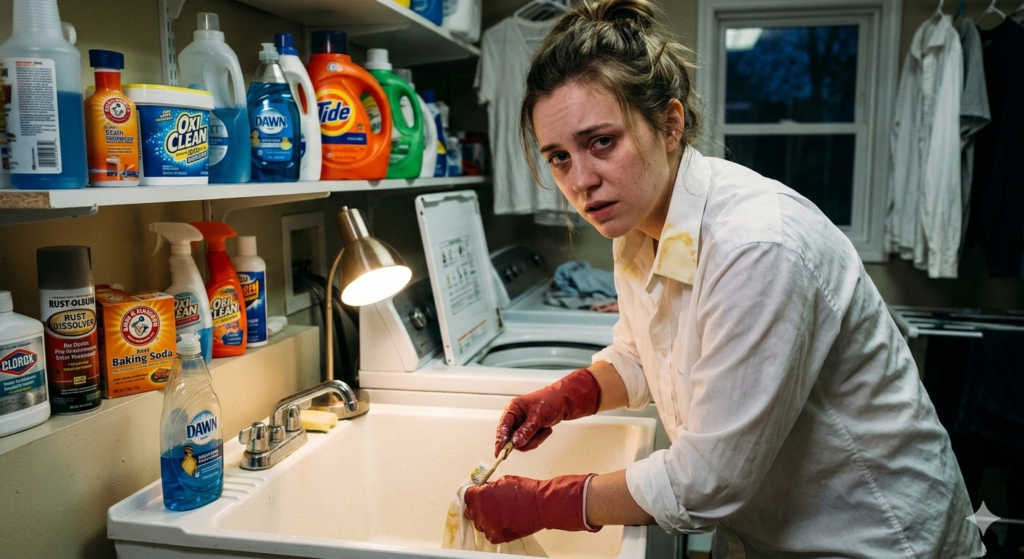
When oil lands on a white shirt, the first instinct is usually to search for a DIY solution.
There are countless step-by-step guides online, often with photos and videos that make the process look simple.
But how effective is it in real life? And is it worth the time and risk?
Common At-Home Method for Oil Stains
Most home stain-removal tutorials follow a similar pattern.
Step 1: Apply Dish Soap
Dish soap is designed to break down grease, which makes it the most commonly recommended first treatment for oil stains.
Step 2: Add Baking Soda
Baking soda is typically sprinkled over the area to help absorb excess oil and lift residue from the fabric.
Step 3: Gently Scrub
A soft toothbrush is used to work the mixture into the fibers. The goal is penetration without damaging the material.
Step 4: Let It Sit
The treated area is left untouched for about 10 to 15 minutes.
Step 5: Machine Wash
The shirt is washed in the machine, usually with other laundry.
Step 6: Air Dry Only
If any stain remains and the shirt goes into the dryer, heat can permanently set the oil. Air drying is strongly recommended until the stain is completely gone.
What Often Happens After Washing
In theory, the process is logical.
In practice, oil behaves differently than many people expect.
Oil does not simply sit on the surface. It penetrates into the fibers, especially in cotton dress shirts.
Common outcomes include:
- The stain becomes lighter but leaves a faint yellow shadow
- The process must be repeated multiple times
- Fabric begins to show wear from scrubbing
- The shirt accidentally goes into the dryer and the stain sets
Once heat sets an oil stain, removal becomes significantly more difficult.
Cost Comparison: DIY vs. Professional Cleaning
Professional oil stain treatment for a dress shirt typically ranges between $8 and $15, depending on location.
At home, the financial cost is lower, but consider the total investment:
- Active treatment time
- Waiting and re-washing
- Water and energy usage
- Risk of permanent damage
- Uncertainty about the final result
For some, saving that amount is worth the effort.
For others, the time and risk may outweigh the savings.

How Professional Cleaning Handles Oil Stains
Professional cleaners do not rely on dish soap alone.
Targeted Pre-Treatment
Oil-specific agents are applied in controlled amounts.
Process Control
Water temperature, agitation level, and chemical balance are carefully managed.
Secondary Treatment If Needed
If residue remains, oxygen-based treatments or specialty agents may be used.
Proper Finishing
The shirt is pressed and finished to restore structure and appearance.
The difference lies in precision and experience.
So, Should You Wash It at Home?
or light, fresh stains, home treatment can work.
But for visible oil marks on a white dress shirt — especially one you care about — the decision isn’t just about money.
It’s about time, risk, and the final result.
Sometimes saving $10 feels smart.
Sometimes protecting the shirt — and your time — is the smarter choice.
You may also find this helpful: