
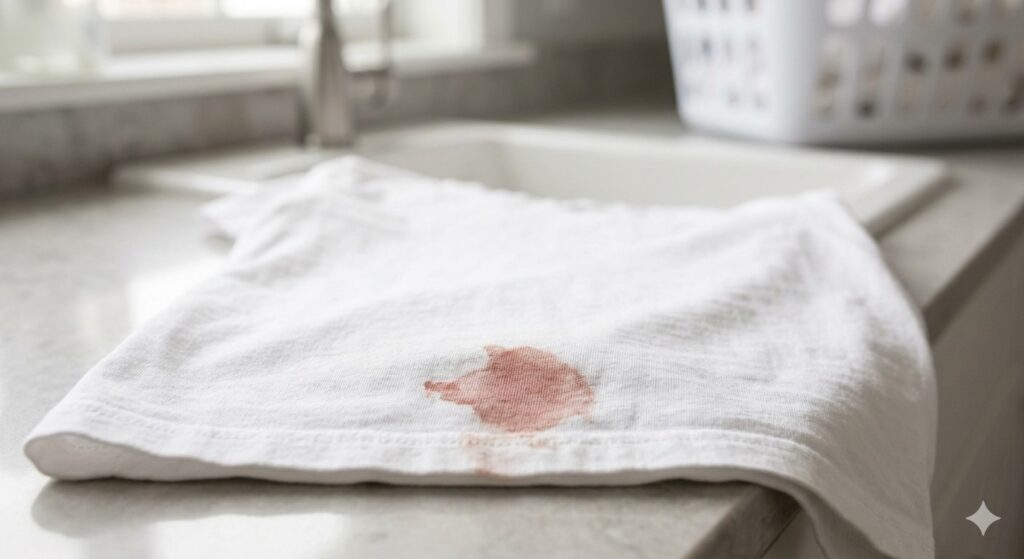
Blood stains are difficult to remove because they contain proteins and iron that bind tightly to fabric fibers over time. If treated incorrectly—especially with heat—the stain can permanently set.
The good news is that with the right step-by-step approach, most blood stains can be removed at home without leaving a trace.
Below is a 7-step routine used by many professional cleaners to remove blood stains safely and effectively.
What You’ll Need
– Ammonia Solution or Blood Stain Remover
– Citric Acid Solution (Optional)
– OxiClean
– Rust Remover (Optional)
Quick Stain Removal Steps
1. Apply blood stain remover.
2. Rinse with cold water.
3. Soak in OxiClean.
4. Final rinse with cold water (add citric acid to neutralize).
6. Apply rust remover and rinse (optional).
Apply an Alkaline Protein Remover (Ammonia Solution)
Start by spraying a small amount of diluted household ammonia onto the stained area.
Ammonia works as an alkaline protein remover, helping loosen the protein structure found in blood.
Allow the liquid to soak into the fibers and wait until you notice the stain beginning to soften.
Important Fabric Warning
Ammonia is not safe for all fabrics.
Delicate animal fibers such as silk, wool, or cashmere are very sensitive to ammonia and should never be treated with it.
Dyed fabrics can also be vulnerable to strong alkalinity, which may cause color fading or dye damage.
If the garment is delicate or brightly dyed, always test on an inside seam first or consider using a milder stain remover.
Safety Tip
Always dilute ammonia with water (about 1:5 ratio).
Gentle Mechanical Tapping (Not Scrubbing)
Once the stain has softened, use a laundry brush or a soft cleaning brush.
Instead of scrubbing back and forth, gently tap the stained area vertically.
This helps break apart blood particles trapped between the fibers without damaging the fabric or spreading the stain.
First Rinse with Cold Water
After loosening the stain, rinse the area with cold water.
Blood proteins coagulate when exposed to heat, usually around 104°F (40°C) or higher.
Using warm water too early can permanently set the stain.
Always use cold water until the stain is mostly gone.
Soak in Oxygen Bleach (OxiClean)
To remove any remaining pigments, soak the garment in oxygen bleach solution.
Oxygen bleach releases active oxygen bubbles that help push out microscopic stain particles and restore brightness.
Typical soaking time is 1–2 hours for normal stains and up to 4 hours for older stains.
Always check the garment care label before soaking.
Rinse Thoroughly
After soaking, rinse the clothing thoroughly with clean water.
At this stage, most common blood stains are usually gone.
If the stain has disappeared, proceed with a normal laundry cycle.
Final Step: Remove Iron Oxidation (Rust-Like Residue)
If a faint yellow or brown mark remains after washing, it may be caused by oxidized iron from the blood.
This residue behaves similarly to rust stains.
Apply a small amount of rust remover directly to the area.
The discoloration will usually disappear quickly once the reaction starts.
After the stain disappears, wash the garment normally to complete the process.
Common Mistakes That Make Blood Stains Harder to Remove
Avoid these common mistakes:
Using hot water first
Scrubbing aggressively and spreading the stain
Drying the garment before the stain is fully removed
Applying chlorine bleach directly to fresh blood stains
These mistakes can cause the stain to set deeper into the fabric fibers.
You may also find this helpful:
How to Remove Coffee and Juice Stains from Clothes