
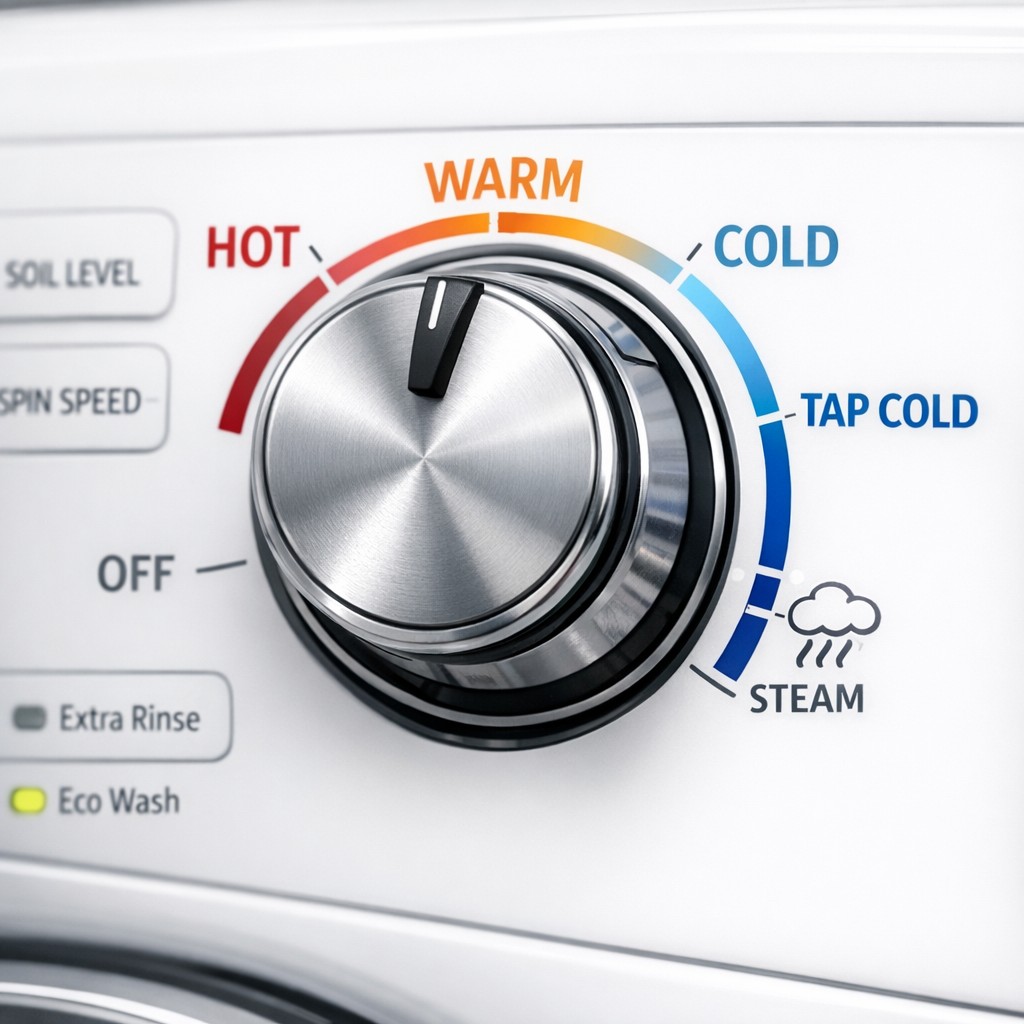
Modern washing machines do not operate with fixed temperatures alone. Instead, they use a combination of water mixing, built-in heating elements, and automatic sensors to adjust washing conditions dynamically.
Because of this, most settings are better understood as washing “modes” rather than exact temperatures.
How Washing Machine Temperatures Actually Work
Most machines use three systems:
- Hot + cold water mixing
- Internal heating element (on selected models)
- Automatic cycle-based temperature control
This means the actual water temperature can vary during the wash cycle depending on load size, fabric type, and selected program.
🔴 HOT Setting (Deep Cleaning & Sanitizing Wash)
Real Temperature Range:
120–140°F (50–60°C)
What it does:
- Uses hot water line and may boost temperature internally
- Provides the strongest cleaning performance
Best for:
- Towels
- Bed sheets
- Heavy stains
- Work clothes
- Hygiene-focused laundry
⚠️ May shrink delicate fabrics or fade colors.
🟠 WARM Setting (Everyday Standard Wash)
Real Temperature Range:
85–105°F (30–40°C)
What it does:
- Mixes hot and cold water
- Most commonly used general-purpose cycle
Best for:
- T-shirts
- Jeans
- Underwear
- Daily clothing
✔️ This is the closest equivalent to a 40°C standard wash in many laundry systems.
🔵 COLD Setting (Fabric Protection Mode)
Real Temperature Range:
60–80°F (15–27°C)
What it does:
- Primarily uses cold water with minimal adjustment
- Focuses on protecting fabric and color integrity
Best for:
- Colored clothing
- Delicate fabrics
- Activewear (polyester, spandex)
- Shrink-sensitive garments
❄️ TAP COLD (True Cold Water Wash)
Real Temperature Range:
40–75°F (4–24°C, varies by season)
What it does:
- Uses incoming tap water without heating
- No temperature adjustment by the machine
Best for:
- Dark clothing
- Light washing needs
- Energy-saving laundry
Temperature varies significantly depending on season and water supply.
🌫️ STEAM OPTION (Wrinkle, Odor & Gentle Sanitizing Support)
What it actually is:
The steam function is a supportive cleaning and finishing feature, not a full wash cycle.
It works by:
- Heating a small amount of water
- Creating low-pressure steam or hot moisture
- Releasing it into the drum during or after the wash cycle
👉 It is NOT a full “boiling steam wash” system.
Typical Steam Temperature:
- Localized heating: 104 – 200°F (60 – 95°C) range
- Short bursts of steam, not continuous boiling
What Steam Actually Does:
✔️ 1. Wrinkle Reduction (De-wrinkle)
- Loosens fabric fibers
- Reduces ironing time
✔️ 2. Odor Removal (Refresh)
- Helps reduce sweat and light odors
- Refreshes lightly worn clothes
✔️ 3. Mild Sanitization Support
- Helps reduce allergens (dust mites, pollen)
- Provides partial bacteria reduction
⚠️ Not a medical-grade sterilization process
✔️ 4. Stain Pre-treatment Support
- Helps loosen oils and proteins
- Improves detergent effectiveness
Automatic Temperature Control (Important Hidden Feature)
Many modern washing machines automatically adjust temperature regardless of the selected setting.
This depends on:
- Fabric detection systems
- Load size sensors
- Cycle type (eco, heavy duty, normal)
- Incoming water temperature
Examples:
- “Normal” cycles often default to warm-like temperatures
- “Eco” cycles reduce heating to save energy
- “Heavy duty” cycles may increase heat during wash stages
👉 Result:
The selected setting is a guideline, not a fixed temperature value
Common Misunderstandings
❌ Warm = exact 105°F
It is only an approximate range.
❌ Cold = ice water
Temperature varies by season.
❌ Steam = boiling sterilization
Steam is a low-pressure fabric care feature, not full sterilization.
❌ Selected setting = exact temperature
Many machines adjust automatically during the cycle.
🧾 Final Summary
Washing machine settings are not fixed temperatures but adaptive cleaning modes combining water mixing, heating, and automated control systems.
- HOT = Deep cleaning & sanitizing
- WARM = Everyday balanced wash (~40°C equivalent)
- COLD = Fabric protection
- TAP COLD = Natural water temperature
- STEAM = Wrinkle reduction, odor refresh, and mild fabric care support
🧺 Pro Tip from a Dry Cleaner
For most everyday laundry, WARM is the safest default setting.