
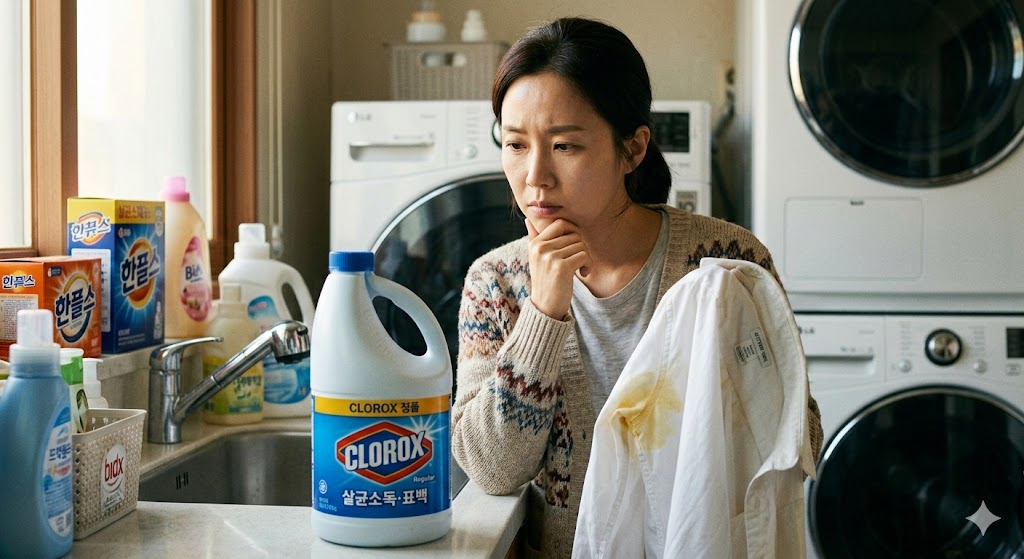
Chlorine bleach is one of the most powerful stain removers and disinfectants used in laundry. It can whiten fabrics, remove stubborn stains, and kill bacteria effectively.
However, improper use can damage fibers, weaken fabric structure, or cause irreversible yellowing. For this reason, chlorine bleach should always be used carefully and only in specific situations.
For most home laundry situations, using chlorine bleach is not recommended unless you clearly understand the fabric and the correct dilution method.
Fabrics That Can and Cannot Handle Chlorine Bleach
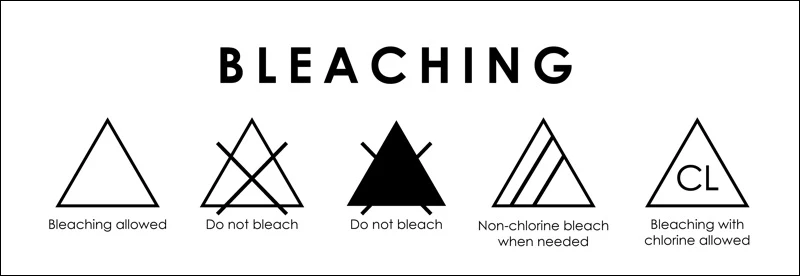
Before using bleach, always check the laundry label. The triangle symbol on the care tag indicates whether bleaching is allowed.
Fabrics That Can Handle Chlorine Bleach
These fabrics are generally durable enough to tolerate diluted chlorine bleach.
- White cotton
- Linen
- Polyester
Chlorine bleach works best on strong white cotton fabrics. Do not use on colored ones.
Fabrics That Should Never Be Bleached
Some fibers react very poorly to chlorine bleach and may be permanently damaged.
Most white poly-blend fabrics aren’t naturally white; they are coated with Optical Brightening Agents (OBAs). These chemicals reflect light to create that “brilliant white” look we see.
- The Bleach Attack: Chlorine bleach is a powerful oxidizer. It doesn’t just remove stains—it aggressively strips away this essential white coating.
- The Raw Reality: Once the coating is destroyed, the natural, creamy yellow base of the polyester or nylon fibers is exposed, leaving your clothes looking dingy and discolored.
Animal fibers
Silk, wool, and cashmere are protein-based fibers. Chlorine bleach can quickly weaken or dissolve these fibers and cause severe yellowing.
Stretch fabrics
Spandex or Lycra contains elastic components that can break down when exposed to chlorine bleach, causing the fabric to lose its stretch.
Specialty coated fabrics
Water-repellent clothing or coated performance fabrics may lose their protective finish.
Removing Yellowing and Stains
Removing Yellow Sweat Stains
Yellowing caused by sweat is typically the result of oxidized proteins and body oils.
Instead of applying bleach directly, always use a diluted solution.
Method
Mix about 1.5 oz of chlorine bleach with 2 gallons of water.
Soak the garment for about 5 to 10 minutes.
Important note
Leaving the garment too long in bleach can weaken the fabric and eventually cause holes.
Treating Food or Ink Stains
For localized stains, spot treatment is often more effective than soaking.
Method
Mix bleach and water at a 1:1 ratio in a small container.
Dip a cotton swab into the solution and gently dab only the stained area.
Once the stain begins to fade, immediately place the garment in the washing machine and rinse thoroughly.
Best Practices for Using Chlorine Bleach
Always Dilute First
Never pour bleach directly onto dry fabric.
Always dilute it in water first before adding clothing to avoid uneven bleaching or permanent fabric damage.
Use Moderate Water Temperature
Bleach works best in lukewarm water. Extremely hot water can increase chlorine gas release and may damage fabrics.
Add Bleach at the Correct Time
If your washing machine has a bleach dispenser, use it. The machine will dilute the bleach at the proper stage of the wash cycle.
If there is no dispenser, use soaking method.
Rinse Thoroughly
Residual chlorine left in fabric can cause yellowing during drying, especially in sunlight.
For protection, a chlorine neutralizer must be used during the final rinse.
A simple method is adding diluted sodium thiosulfate:
- 1 gallon of water
- 1/4 teaspoon sodium thiosulfate
This helps neutralize leftover chlorine.
Important Safety Precautions
Never Mix with Acidic Cleaners
Mixing chlorine bleach with acidic cleaners such as toilet cleaners or vinegar can produce dangerous chlorine gas.
Ensure Proper Ventilation
Always use bleach in a well-ventilated space and avoid prolonged exposure in enclosed areas.
Watch for Metal Parts
Zippers or buttons made from copper or aluminum can corrode and turn dark when exposed to chlorine bleach.
🧺 Pro Tip from a Dry Cleaner
Chlorine bleach (Clorox) is something we treat as a last resort — even in a professional dry cleaning setting. If there’s any other option, we avoid it. And on colored garments, it’s almost guaranteed to cause damage. I’ve seen it strip dye instantly, leave permanent white patches, and in some cases weaken the fabric beyond repair. When in doubt, don’t reach for the Clorox.
You may also find this helpful: