
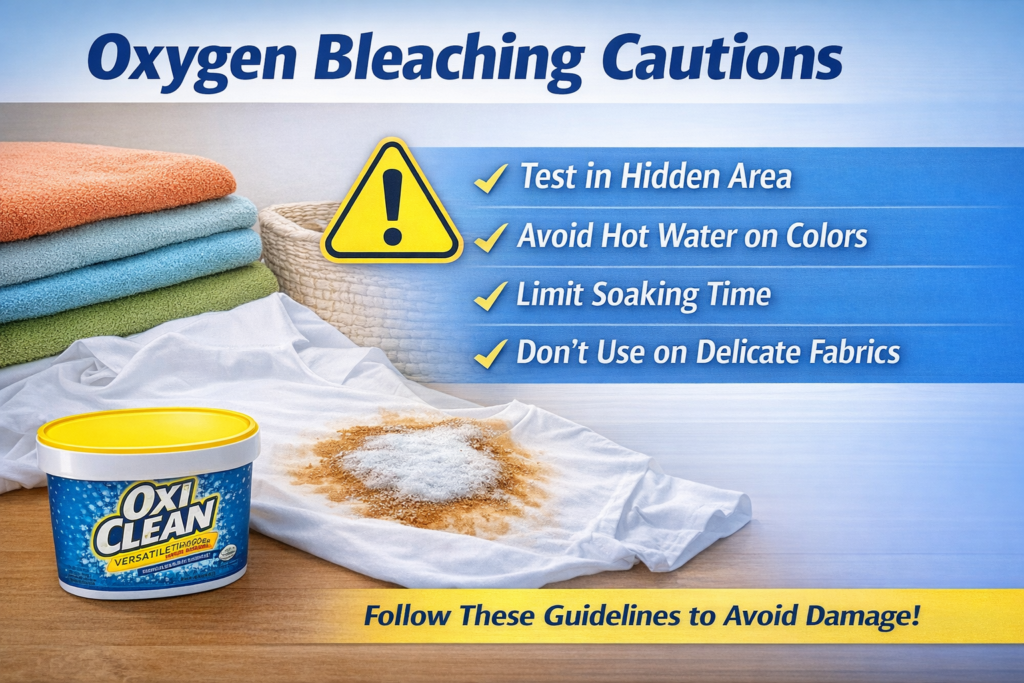
Tannin-based stains from coffee, fruit juice, and red wine are among the most persistent challenges in garment care. While oxygen-based bleaches are remarkably effective at breaking down these organic pigments and reversing the oxidation that causes yellowing, choosing the right product makes a significant difference. While pure sodium percarbonate is the active base, specialized formulas like OxiClean are often more effective for household use because they are engineered to dissolve and activate much more efficiently in warm water. This enhanced solubility ensures a more consistent chemical reaction, making it a superior choice for targeting stubborn stains without the hassle of manual mixing.
Optimal Conditions for Stain Breakdown
The effectiveness of oxygen bleach is heavily dependent on thermal energy. To fully activate the cleaning agents, the water temperature should ideally be maintained between 40°C and 60°C. One of the primary reasons OxiClean is recommended over raw sodium percarbonate is its ability to trigger its oxygen-releasing power quickly within this temperature range. Cold water often fails to dissolve the crystalline structure of the powder, which can lead to localized spotting. Ensuring the formula is completely dissolved before introducing the garment prevents concentrated chemical contact that could lead to uneven lightening.
Protecting Color Integrity and Fabric Dye
When working with colored garments, caution is paramount to prevent unwanted fading or bleeding. Even though oxygen bleach is generally considered color-safe, certain dyes—especially on natural fibers like cotton—may not be colorfast. It is essential to perform a spot test on an inconspicuous area, such as an interior seam, before full immersion. If any color transfers to a white cloth during the test, the garment should not be treated with oxygen bleach. Furthermore, keeping the soak time precise is vital for colored items, as overexposure can lead to a gradual loss of vibrancy even if the dye is relatively stable.
Protecting Delicate Fiber Structures
Despite its versatility, oxygen bleach is an alkaline agent that can be aggressive toward protein-based fibers. Materials such as silk, wool, and cashmere should never be treated with these products, as the alkaline reaction can dissolve the fiber’s natural protective layer, leading to brittleness or permanent loss of luster. For cotton and synthetic blends, the duration of exposure is the critical factor. Limiting the soak time to under one hour prevents the redeposition of suspended soils back into the fabric pores and protects the long-term strength of the weave.
Managing Metallic Accents and Chemical Reactions
One of the most overlooked risks involves hardware and metallic details. Fasteners, zippers, and decorative studs can act as catalysts, causing a rapid oxidative reaction that may not only discolor the metal but also create small holes in the surrounding fabric, a phenomenon known as pinholing. When treating garments with significant metal components, localized spot treatment is often safer than full immersion. Additionally, maintaining chemical purity is essential; mixing oxygen bleach with chlorine-based products is hazardous and renders the cleaning properties of both agents ineffective.
🧺 Pro Tip from a Dry Cleaner
In my experience, there are certain fabrics and colors I never soak in OxiClean: linen, cotton, silk, wool, denim, anything in a vivid color, and anything black. The risk of color damage simply isn’t worth it. For these, stick to a targeted pre-treatment instead of a full soak.
You may also find this helpful: