
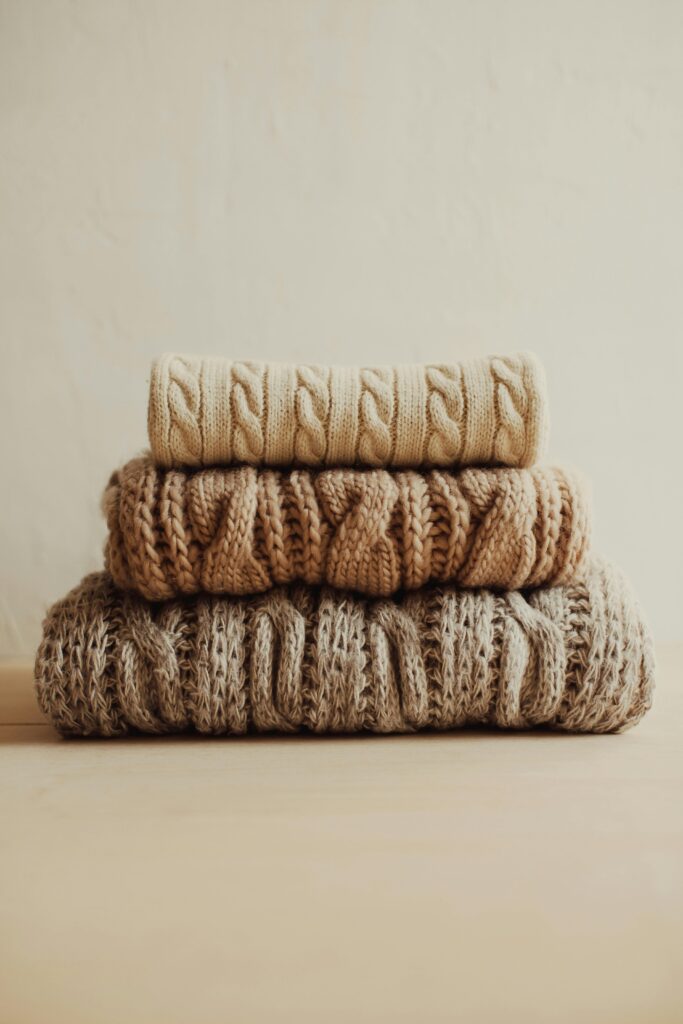
Many people believe the dedicated wool cycle on their washing machine is a safe way to clean knitwear. However, from a professional cleaner’s perspective, letting a delicate sweater soak in water for nearly an hour is a recipe for disaster. This extended exposure leads to felting—where the fibers lock together, causing the garment to shrink and become stiff.
To keep your expensive sweaters looking brand new for a lifetime, you need to abandon the automated settings. The following professional methods focus on speed and fiber protection through a 15-minute rule and the expert-favored basket method.
Understanding the True Nature of Wool Cleaning
Wool does not require the same aggressive agitation as cotton t-shirts. Its structure is designed to repel dirt naturally, meaning most “soiling” is actually just surface dust and light perspiration trapped between the fibers.
Avoid Over-wearing Between Washes
The longer you wait to wash a heavily used sweater, the more difficult the stains become to remove. This forces you to increase wash times, which inevitably damages the fabric. The key is to wash lightly soiled garments more frequently using a quick-rinse approach.
The Critical Pre-Wash Inspection
Before the garment ever touches water, you must inspect it for minor holes or signs of moth damage.
Why Water Weight is the Enemy
When wool absorbs water, it becomes incredibly heavy. During the spinning process, the centrifugal force combined with this extra weight pulls at any weak points in the fabric. A tiny, barely visible moth hole can instantly transform into a massive, irreparable tear during a standard machine cycle.
Professional Method: The Five Minute Basket Pump
This is the gold standard for high-end knitwear. It bypasses the mechanical agitation of a machine entirely, using only water pressure and gentle manual force.
The Preparation Phase
Fill a basin with warm water between 30°C and 35°C. Warm water is more effective at dissolving oils and perspiration quickly, which significantly reduces the total time the garment needs to stay submerged. Add a specialized wool detergent and mix until fully dissolved.
Agitation and Rinsing
Submerge the sweater and gently press down with your palms, then release. Repeat this pumping motion for approximately three minutes. Never rub the fabric together, as friction causes pilling. Once finished, drain the basin and rinse twice with clean water.
Controlled Extraction
Never wring a sweater by hand. Instead, place it in a laundry bag and use the spin-only setting on your washing machine for 60 to 90 seconds on a low RPM. This removes excess moisture without stretching the fibers.
Dry Flat
Spread it out on the laundry rack. Once it’s over 90% dry, tumble dry on low for about 2 minutes.
Hand wash machine cycle use: The 15 Minute Machine Hack
If you must use a washing machine, skip the pre-set wool cycle and use manual settings to minimize water exposure.
Setting the Manual Cycle
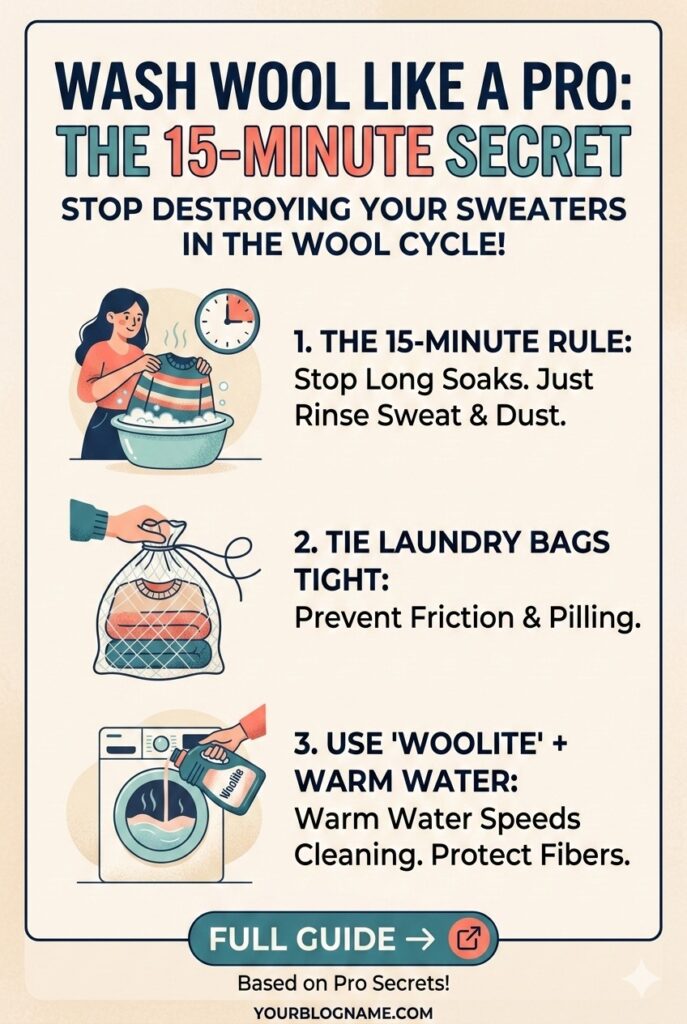
Configure your machine for a 5-minute wash, 2 rinses, and a 1-minute spin. The entire process should take no more than 15 minutes. This drastically reduces the time the fibers spend in a vulnerable, wet state.
Dry Flat
Spread it out on the laundry rack. Once it’s over 90% dry, tumble dry on low for about 2 minutes.
The Laundry Bag Secret
The sweater must be immobile inside the laundry bag. If the bag is too large, the garment will tumble and rub against the mesh, creating friction. Use a string or elastic band to tie the bag tightly around the sweater, ensuring it cannot move during the cycle.
Why Detergent Choice Matters
Not all pH-neutral detergents are created equal. Professional cleaners often reach for specialized products like Woolite because they contain specific fiber-protecting agents and lubricants that standard detergents lack. Investing in a dedicated wool formula is a small price to pay for maintaining the luster and softness of protein-based fibers.
Summary of the Professional Cleaning Sequence
- Inspection: Turn the garment inside out and check for holes or stains.
- Securing: Place in a mesh bag and tie it tightly to prevent movement.
- Solution: Use warm water mixed with a premium wool-safe detergent.
- Execution: Complete the wash in under 15 minutes, whether by hand or machine.
- Drying: Remove excess water with a towel and lay flat on a drying rack in the shade.
By prioritizing speed and minimizing friction, you can achieve professional-grade results at home. Protect your investment by taking control of the process and avoiding the trap of the 50-minute wool cycle.