
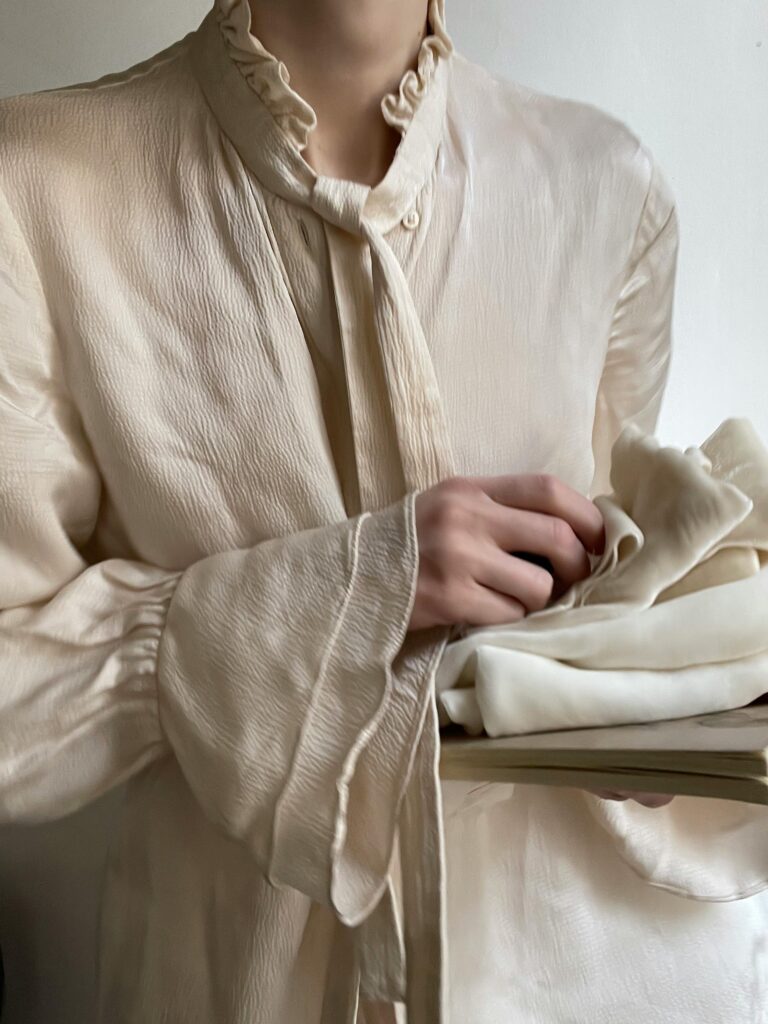
Silk is a timeless, luxurious fabric prized for its elegant sheen and soft drape. However, its protein-based fibers are highly sensitive to heat, friction, and alkaline substances. While many believe silk is “dry clean only,” you can maintain its beauty at home with the right professional techniques.
This guide covers the essential steps to washing silk without compromising the integrity of the fabric.
Essential Pre-Wash Inspection
When to Choose Professional Dry Cleaning
Not all silk garments are suitable for home laundering. Before you begin, inspect the design and dye stability. Most importantly, pleated silk or garments with intentional heat-set creases must never be submerged in water. Washing these at home will cause the pleats to relax and disappear permanently.
You should also perform a quick spot test. Dampen a small, hidden area of the fabric and press it with a white cloth. If the color transfers too much to the cloth, the dye is unstable, and the garment should be taken to a professional dry cleaner to avoid bleeding.
Tailored Methods for Light and Dark Silks
Customizing Your Approach by Color
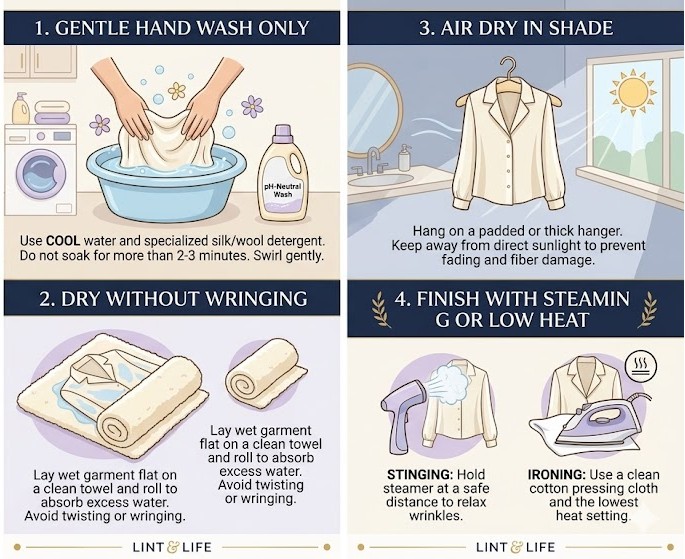
Silk requires a pH-neutral detergent (wool or silk wash) and cool water (below 30°C). Beyond these basics, your technique should vary based on the color of the garment.
For white or pastel silks, the priority is preventing yellowing. Pre-treat any stubborn areas around the collar or cuffs with a drop of neutral detergent, then submerge the garment for no more than two to three minutes. Adding a tablespoon of white distilled vinegar to the final rinse helps neutralize residues and keeps the whites bright.
For dark silks, such as black, navy, or deep emerald, the goal is preserving the dye and preventing “chalking”—those white, cloudy streaks caused by friction. Minimize agitation and finish the wash within one minute to prevent excessive dye loss. Never rub the fabric against itself.
Advanced Drying Techniques for Spot-Free Results
Moisture Management and Air Drying
Silk is at its weakest when wet. Wringing or twisting the fabric will cause permanent fiber breakage and distortion. After rinsing, lay the silk flat on a clean, plush towel and press down gently to absorb the excess moisture.
Dark silks require extra caution during this stage. If hung while dripping wet, the concentrated dyes may migrate and settle at the bottom hem, creating unsightly watermarks or streaks. Ensure the piece is thoroughly blotted with a towel before laying it flat to dry in a well-ventilated area, away from direct sunlight.
Using a fan on a low setting is an excellent way to facilitate air circulation and ensure your silk dries evenly without heat damage.
Professional Finishing: Ironing and Steaming
Restoring Texture Without Heat Damage
Ironing is where many delicate items are accidentally ruined. Direct, high heat can scorch silk fibers or cause a “shiny” synthetic look that destroys the natural luster.
When using a traditional iron, always place a clean cotton pressing cloth between the iron and the silk. Set the temperature to the lowest “silk” setting and move the iron continuously. If you prefer a steamer, maintain a safe distance from the fabric. Use the steam to gently relax the wrinkles rather than saturating the fibers, which can lead to localized water spotting.
Expert Insight: The secret to long-lasting silk is knowing your limits. While most silk shirts and scarves are easy to manage at home, intricate designs like pleated skirts are best left to the professionals.
Much like washing a wool sweater, laundering silk should be approached as a gentle process of ‘dusting off’ light impurities rather than an aggressive scrub to remove deep stains. You must never handle the fabric roughly in an attempt to pull out dirt, as this will lead to irreversible damage.
You may also find this helpful: