
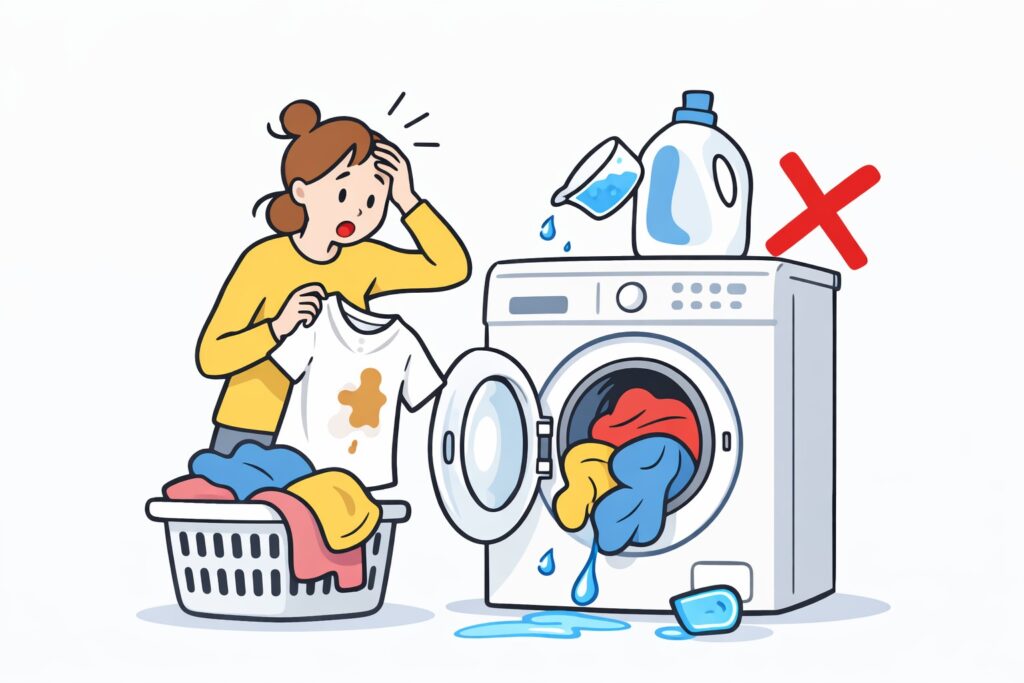
Many of us treat laundry as a “set it and forget it” chore. However, years of professional experience show that small habits in the laundry room can be the difference between a garment that lasts a decade and one that ruins in a month. If you want cleaner clothes and a longer-lasting washing machine, it is time to refine your process.
The Perils of Pre-Wash Piling
Stacking damp clothes for too long before washing is a fast track to color bleeding and mold growth. Fabrics left together in a warm, moist heap create the perfect environment for dyes to migrate and mildew to take hold. To protect your garments and maintain their freshness, sort and start your wash promptly instead of letting wet clothes linger in a pile.
Master the Art of Pre-treating Stains
One of the most frequent errors is tossing stained clothing directly into the drum. For oil-based stains specifically, simply adding detergent isn’t enough. You should apply a dedicated oil remover and allow it to sit for three to four minutes. This brief pause gives the chemical agents enough time to break down the lipids before the water cycle begins.
Why You Should Never Rub a Stain
When a spill happens, the instinct is to scrub it vigorously. However, rubbing forces the stain deeper into the fabric fibers and can cause permanent pilling or thinning of the material. Instead of friction, use gentle blotting and allow your pre-treatment products to do the heavy lifting.
Do Not Use too Much Detergent
If you live in an area with hard water, you might notice your clothes feeling stiff or looking gray over time. Instead of doubling the amount of detergent—which leads to buildup and skin irritation—try adding washing soda. It effectively softens the water, allowing a smaller, standard amount of detergent to work far more efficiently.
Sorting by Color to Prevent Dullness
Mixing lights and darks is a shortcut that eventually ruins your wardrobe. Even if a garment doesn’t cause a major “dye disaster” in one wash, micro-bleeding occurs every time. Over time, your bright whites and pastels will take on a dingy, grayish hue that is nearly impossible to reverse.
Finding the Right Temperature Balance
There is a common misconception that cold water is always the safest choice. For dark loads, a warm setting between 90°F and 100°F is usually ideal for removing body oils without fading the fabric. White loads can typically handle 104°F or higher to maintain brightness. However, be cautious of extreme heat; crossing the 140°F threshold often leads to permanent shrinkage or severe color bleeding.
Optimizing Load Size
A packed washing machine cannot clean effectively. When the drum is overcrowded, clothes cannot move freely, preventing the mechanical action required to scrub away dirt. For the best results, never fill your machine past 70% capacity. This ensures that water and soap can circulate through every fiber.
The Hidden Danger of Post-Wash Delay
Leaving wet laundry in the machine is a recipe for mildew. Even a few hours of sitting in a damp, dark environment can lead to stubborn odors that require a re-wash. To keep your clothes smelling fresh and to minimize deep-set wrinkles, make it a priority to transfer your load to the dryer or rack immediately after the cycle ends.
Essential Maintenance for Your Machine
Your washing machine needs care to prevent it from becoming a breeding ground for bacteria. After every cycle, leave the door and the detergent drawer open to let internal moisture evaporate. Additionally, regular tub cleanings are necessary to remove the hidden buildup of oils and detergent residue that accumulates behind the drum.
Small Details That Protect Fabric
- Fasten All Zippers: Open zippers act like saws inside the drum, snagging and tearing delicate knits. Always zip them to the top before washing.
- Flip Your Socks: Sweat and skin cells accumulate on the inside of socks. Turning them inside out ensures the water hits the area that needs the most cleaning.
- Skip the Softener on Towels: Fabric softener coats towel fibers in a waxy layer, which significantly reduces absorbency and can lead to increased pilling.
Respecting the Fabric Label
Every garment comes with a roadmap for its survival. Ignoring the care label is the fastest way to ruin silk, wool, or linen. Before you start the machine, take a moment to verify the heat tolerance and cycle recommendations. A few seconds of reading can save a high-quality piece of clothing from a permanent disaster.
You may also find this helpful: