
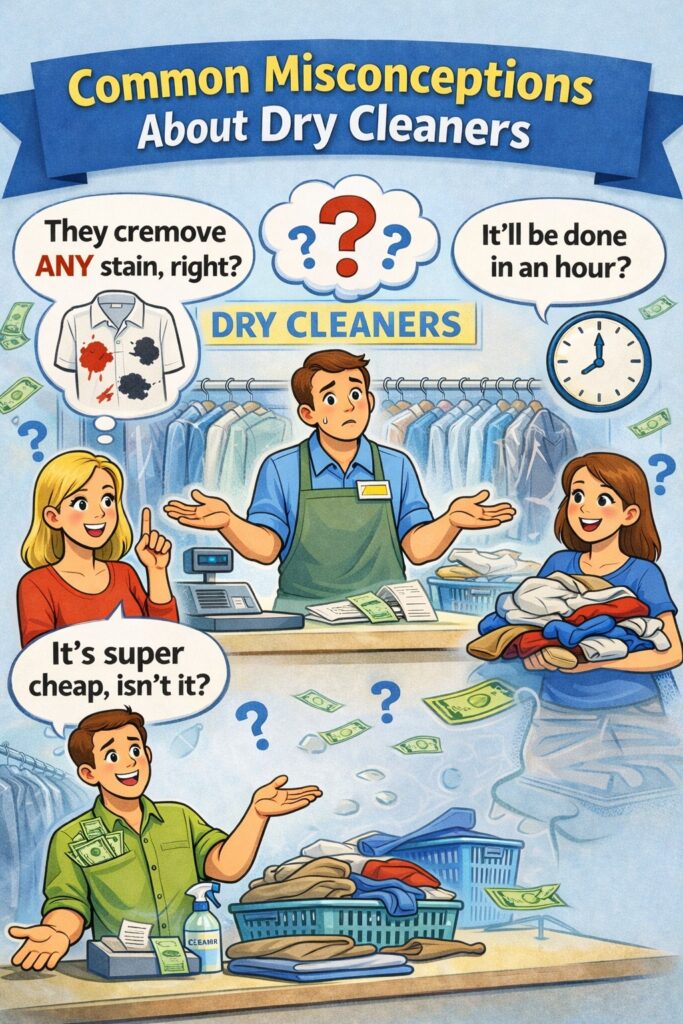
Many people view professional garment care as a simple errand, but there is a complex science behind maintaining high-quality apparel. It is common for customers to hold onto certain myths that might actually be shortening the lifespan of their favorite clothes. To help you maintain your wardrobe effectively, let’s clear up some of the most frequent misunderstandings in the industry.
The Hidden Risks of One Hour Service
Speed is often mistaken for efficiency, but in the world of professional cleaning, “one-hour service” is rarely a sign of quality. Proper cleaning requires a meticulous process of pre-spotting, careful sorting, a full cleaning cycle, and controlled drying. Rushing this process often means skipping essential inspection steps or using excessive heat to dry clothes quickly, which can damage fibers and set stains permanently. Quality care takes time, and a rushed job is often a compromised one.
The Myth of the Chemical Smell
A common belief is that a strong chemical scent is a sign of a deep clean. In reality, the opposite is true. High-quality cleaning using well-maintained solvents should leave your clothes smelling like absolutely nothing. If garments return with a sharp odor, it often indicates that the filtration system was not optimal or the solvent was reused too many times.
Why Wet Cleaning is Often Superior
While “Dry Clean Only” is a standard label, professional wet cleaning is often a much healthier and more effective alternative. Unlike traditional dry cleaning that uses solvents, wet cleaning utilizes specialized water-based systems to remove water-soluble stains like sweat, salt, and food. It leaves no chemical residue, making it the safest choice for sensitive skin and delicate fibers.
Why Cleaning Costs May Exceed the Price of the Garment
A frequent question arises when the cleaning bill for a simple item feels high compared to its original purchase price. However, the cost of professional care is determined by the labor, expertise, and specialized equipment required, not the price tag of the clothing. Whether a shirt cost $10 or $100, it undergoes the same rigorous process, utilizes the same premium reagents, and requires the same professional attention to detail.
Does Frequent Cleaning Damage Clothes
Some believe that frequent cleaning wears out the fabric. However, the true enemy of clothing is the buildup of body oils, perspiration, and environmental dust. When these substances remain in the fibers, they oxidize and cause permanent yellowing or fiber rot. Regular, professional care actually preserves the elasticity and strength of the material by removing these harmful elements.
The Hidden Value of Care Labels
Those long, scratchy tags might be annoying, but they are the only “instruction manual” for your garment. Modern fabrics are often sophisticated blends that are impossible to identify by touch alone. When a label is removed, a cleaner must guess the best treatment, which increases the risk of damage. If you must remove it, it is highly recommended to take a clear photo of both sides of the tag for future reference.
Understanding the Cost of Stain Removal
It is important to understand that professional fees cover the expertise, time, and specialized reagents used during the process. Professionals often spend significantly more time on a single stubborn stain than on the rest of the garment. While every effort is made, some stains become permanent due to heat or age. Even if the stain is not completely removed, the labor and resources invested in the attempt remain the same.
Why Your Clothes Might Not Be Ready on Time
It can be frustrating when a “Ready Date” on an invoice is not met, but this is usually a sign of quality control. During the final inspection, a cleaner might discover a hidden spot that requires a second round of specialized care. Because a professional facility manages a high volume of garments in the order they are received, a single difficult stain can sometimes shift the schedule. If you have a specific event or deadline, communicating this at drop-off helps the shop prioritize your items correctly.