
When it comes to caring for our favorite clothes, it’s natural to reach for the “gentlest detergent” available—often a wool-specific detergent. However, using wool detergent indiscriminately without considering the nature of the fabric can actually do more harm than good.
Let’s take a closer look at why wool detergent is not the right answer for every garment—especially towels and down jackets—and what problems it can cause.
What Is Wool Detergent? (Characteristics & Differences)
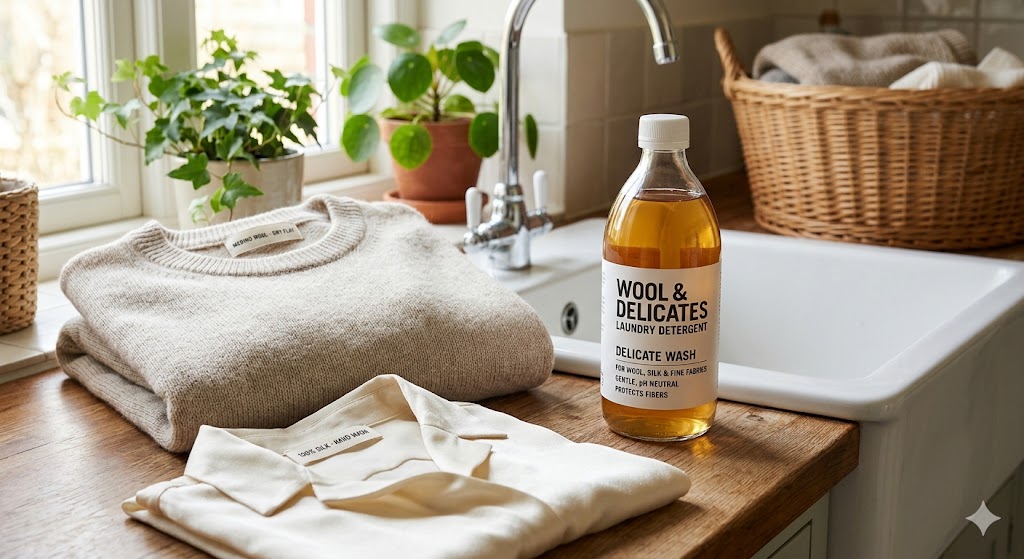
Unlike regular detergents, wool detergents are pH-neutral and specifically formulated to protect protein-based fibers.
- Fabric protection: They help prevent damage and shrinkage in delicate animal fibers such as wool and silk, which are sensitive to alkaline conditions.
- Conditioning agents: This is the key difference from standard neutral detergents. Most wool detergents contain silicone- or oil-based ingredients that coat fibers to soften them and reduce static.
Down Jackets: “A Choice That Ruins Both Shell and Filling”
Using wool detergent on down jackets creates a double problem:
Damage to the outer fabric (technical shell)
Most down jackets have a DWR (Durable Water Repellent) finish that allows water to bead off the surface. The conditioning agents in wool detergent can:
- Break down this water-repellent coating
- Clog the fabric’s microscopic pores
As a result, the jacket becomes more prone to soaking in rain or snow, and its breathability is compromised. Residue left behind can also cause stains or a sticky feel on the surface.
Clumping of the insulation (down feathers)
The softening agents coat the down feathers, making them heavier and causing them to clump together.
- This reduces the jacket’s fill power (loft)
- Once collapsed, the insulation struggles to recover
- The jacket becomes thinner and loses its ability to retain heat
Towels: “Why Coat Something That Needs to Absorb Water?”
The primary function of a towel is to absorb moisture—but wool detergent interferes with this.
Reduced absorbency
The conditioning agents coat each cotton fiber (terry loops), creating a water-repellent effect.
- Towels start to “push water around” instead of absorbing it
- Drying performance drops significantly
Poor cleaning & odor buildup
Towels accumulate dead skin cells and body oils.
- Wool detergents have relatively mild cleaning power
- Residue can remain, allowing bacteria to grow
- This leads to that familiar musty smell over time
Similar Principle to Avoiding Fabric Softeners
The reason you should avoid wool detergent for towels and down jackets is essentially the same reason fabric softeners are not recommended: residual coating agents.
- Towels: Softeners reduce friction (making towels feel soft) but block the pathways that absorb water.
- Technical garments: They clog breathable membranes (like Gore-Tex) and weigh down insulation, reducing performance.
🔍 Wool Detergent vs. Regular Neutral Detergent
| Category | Wool Detergent | Regular Neutral Detergent (Outdoor Use) |
|---|---|---|
| Main purpose | Softening & protection | Shape retention + performance |
| Additives | Contains silicone/conditioning agents | Minimal or no conditioning agents |
| Best for | Knitwear, cardigans, silk | Down jackets, outdoor gear, Gore-Tex |
Summary & Tips
- Always use wool detergent for wool and silk.
- For towels, standard alkaline powder or liquid detergent provides the best hygiene and absorbency.
- For down jackets, use a detergent specifically designed for down or a neutral detergent without conditioning agents to maintain performance.
Understanding the nature of different fabrics—and choosing the right detergent accordingly—can help you keep your favorite clothes in great condition for much longer.
You may also find this helpful:
How to Wash Silk at Home: A Professional Guide to Fabric Care